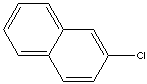
| 2-CHLORONAPHTHALENE | ||
|
PRODUCT IDENTIFICATION |
||
| CAS NO. | 91-58-7 |
|
| EINECS NO. |
202-079-9 |
|
| FORMULA | C10H7Cl | |
| MOL WT. | 162.62 | |
|
H.S. CODE |
||
| TOXICITY | Oral rat LD50; 1540 mg/kg | |
| SYNONYMS | 2-Naphthyl chloride; beta-Chloronaphthalene; Halowax; | |
| SMILES | ||
|
CLASSIFICATION |
|
|
|
PHYSICAL AND CHEMICAL PROPERTIES |
||
| PHYSICAL STATE | white crystalline powder | |
| MELTING POINT | 59 - 60 c | |
| BOILING POINT | 256 C | |
| SPECIFIC GRAVITY | 1.27 | |
| SOLUBILITY IN WATER | Insoluble | |
| pH | ||
| VAPOR DENSITY | ||
|
AUTOIGNITION |
|
|
|
NFPA RATINGS |
Health: 1; Flammability: 1; Reactivity: 0 | |
|
REFRACTIVE INDEX |
||
| FLASH POINT | ||
| STABILITY | Stable under ordinary conditions. Hygroscopic. | |
|
GENERAL DESCRIPTION & APPLICATIONS |
||
| Chloronaphthalenes, also called polychlorinated naphthalenes, PCNs, are organic halogen compounds based on naphthalene ring system formed by replacing hydrogen atoms in naphthalene by one or more chlorines; the generic molecular formula is C10H8-nCln, where n = 1–8. There are 75 congeners of chlorinated naphthalenes having properties of hydrophobic, high chemical and thermal stability, good electric friction and low flammability. Its commercial production was stopped in Europe and USA. They have been used in solvent, wood preservative, immersion oil for testing refractive index and as additives in cable insulation, engine oil, electroplating compounds and capacitors. They are used in producing dyes. | ||
| SALES SPECIFICATION | ||
| APPEARANCE | white crystalline powder | |
| ASSAY |
99.0% min |
|
| MELTING POINT |
57 - 60 C |
|
|
TRANSPORTATION |
||
| PACKING | 25kgs in fiber drum | |
| HAZARD CLASS | Not regulated | |
| UN NO. | ||
| OTHER INFORMATION | ||
| Hazard Symbols: XN, Risk Phrases: 22-36/37/38, Safety Phrases: 26-37/39 | ||