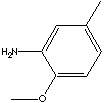
| p-CRESIDINE | ||||||||||||||
|
PRODUCT IDENTIFICATION |
||||||||||||||
| CAS NO. | 120-71-8 |
|
||||||||||||
| EINECS NO. | 204-419-1 | |||||||||||||
| FORMULA | CH3OC6H3(CH3)NH2 | |||||||||||||
| MOL WT. | 137.18 | |||||||||||||
| H.S. CODE |
2922.29.8190 |
|||||||||||||
|
TOXICITY |
Oral rat LD50: 1450 mg/kg | |||||||||||||
| SYNONYMS | m-Amino-p-cresol methyl ester; meta-Amino-p-cresol methyl ether; | |||||||||||||
| 1-Amino-2-methoxy-5-methylbenzene; 2-Amino-4-methylanisole; 2-Methoxy-5-methylaniline; 2-Methoxy-5-methylbenzenamine; 3-Amino-4-methoxytoluene; 3-Amino-p-cresol methyl ether; 3-Amino-para-cresol methyl ether; 4-Methoxy-m-toluidine; 4-Methyl-2-aminoanisole; 5-Methyl-o-anisidine; C.I. Azoic Red 83; Krezidin; Krezidine; 5-Methyl-o-anisidine; p-Kresidin; | ||||||||||||||
|
SMILES |
c1(c(cc(C)cc1)N)OC |
|||||||||||||
|
CLASSIFICATION |
Anisidine, Aromatic amine |
|||||||||||||
|
PHYSICAL AND CHEMICAL PROPERTIES |
||||||||||||||
| PHYSICAL STATE | yellow to brown crystalline solid | |||||||||||||
| MELTING POINT |
50 - 52 C |
|||||||||||||
| BOILING POINT | 235 C | |||||||||||||
| SPECIFIC GRAVITY | ||||||||||||||
| SOLUBILITY IN WATER |
Insoluble (2810 mg/l) |
|||||||||||||
| SOLVENT SOLUBILITY |
Soluble in most common organic solvents |
|||||||||||||
| AUTOIGNITION |
450 C |
|||||||||||||
| VISCOSITY | ||||||||||||||
| PH |
|
|||||||||||||
| VAPOR DENSITY | ||||||||||||||
| log Pow | 1.74 (Octanol-water) | |||||||||||||
| VAPOR PRESSURE | 0.025 (mmHg) | |||||||||||||
| HENRY'S LAW | 1.24E-07 (atm-m3/mole at 25 C) | |||||||||||||
| OH RATE | 2.21E-10 (cm3/molecule-sec at 25 C Atmospheric) | |||||||||||||
| NFPA RATINGS | Health: 2; Flammability: 1; Reactivity: 0 | |||||||||||||
| FLASH POINT | 111 C | |||||||||||||
| STABILITY | Stable under ordinary conditions | |||||||||||||
|
GENERAL DESCRIPTION & EXTERNAL LINKS |
||||||||||||||
Cresidine is
the trivial name for methyl anisidine or methoxy toluidine.
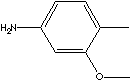
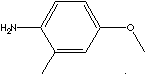
There are three isomers, ortho-,
meta-, and para-cresidine. The
prefix indicate methyl group positions relative to the
methoxy group on the same benzene ring. Aromatic
amines Cresidine, anisidine, toluidine are all homologous to aniline,
the simplest aromatic amine. Aromatic
amines are the fundamental
materials in the dye manufacturing industry. They are
also important in the manufacture of
rubber-processing chemicals, explosives, plastics, antioxidants, drugs, pesticides and other
chemical compounds.
Aromatic
amines take part in many kinds of chemical reactions and offer many industrial
applications.
Wikipedia Linking: http://en.wikipedia.org/wiki/Cresidine http://ntp.niehs.nih.gov/ http://www.inchem.org/ http://ntp.niehs.nih.gov/ |
||||||||||||||
| SALES SPECIFICATION | ||||||||||||||
|
APPEARANCE |
yellow to brown crystalline solid | |||||||||||||
| ASSAY |
98.5% min |
|||||||||||||
| MELTING POINT |
50 C |
|||||||||||||
| TRANSPORTATION | ||||||||||||||
| PACKING | ||||||||||||||
| HAZARD CLASS | ||||||||||||||
| UN NO. | ||||||||||||||
| SAFETY INFORMATION | ||||||||||||||
|
Hazard Symbols: T, Risk Phrases: 45-22, Safety Phrases: 53-45 |
||||||||||||||